
Exercise Physiology
Exercise, prescribed like medicine.
An Accredited Exercise Physiologist is a university-qualified allied health professional who uses movement as treatment. Not a workout — a clinical plan built around your body, your history and what you want to be able to do again.
Open to members and non-members. No referral needed to book.
What they actually do
Not a trainer with a clipboard.
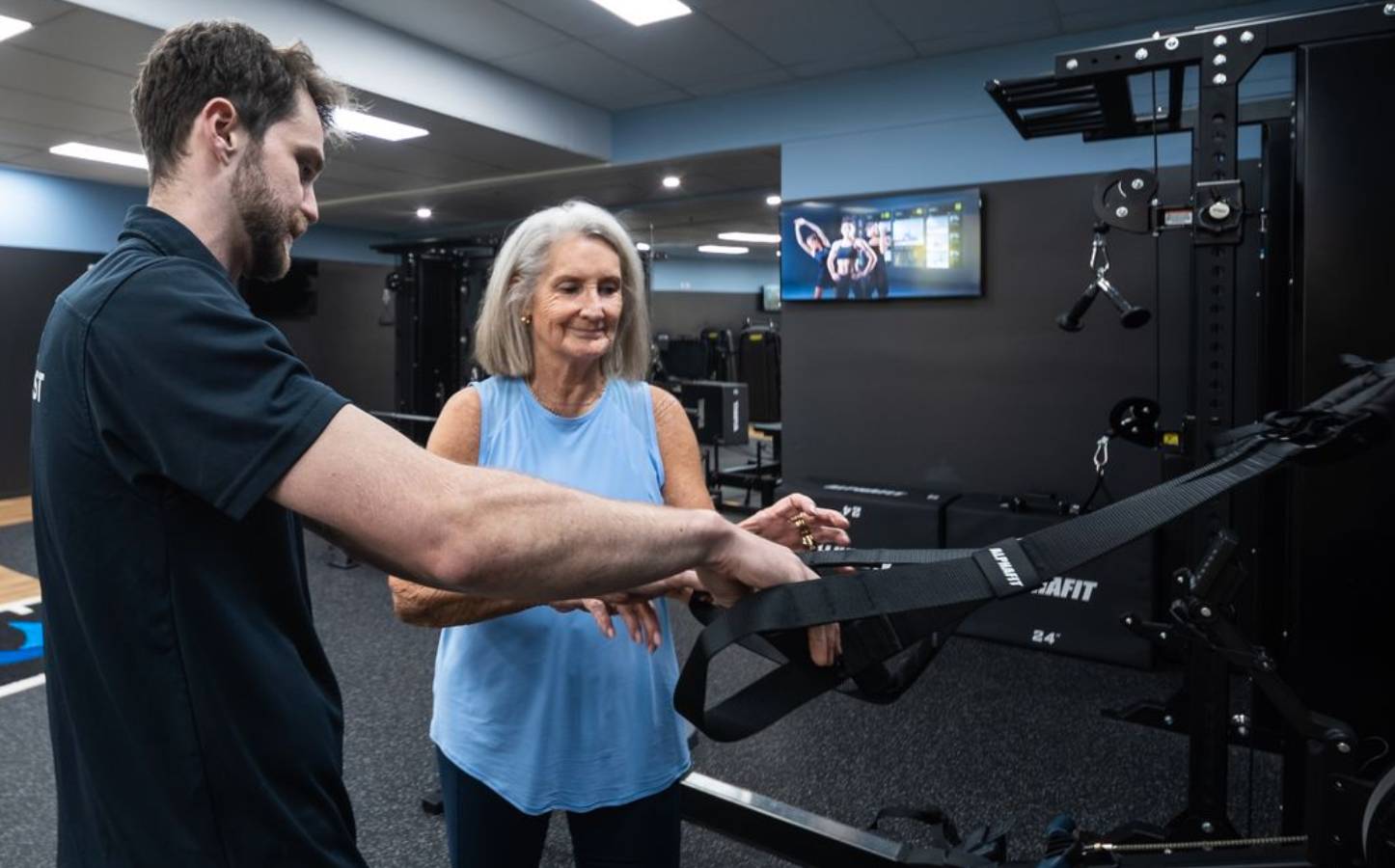
Exercise Physiologists complete a four-year university degree and are accredited through Exercise & Sports Science Australia. They're trained to work with people whose injuries, conditions or medical history make general exercise advice unsafe or useless.
They assess before they prescribe
Strength, balance, joint range, cardiovascular capacity, body composition and full medical history — measured, not guessed at.
They work to a dose
Exercise is prescribed at the level the evidence supports for your condition — how often, how hard, how long, and exactly how it progresses.
They work with your care team
They read your surgeon's protocol, work alongside our physiotherapists and dietitians, and report back to your GP.
How they help our members
Most people arrive with something they've stopped being able to do.
Getting off the floor. Walking the dog without stopping. Sleeping through the night without hip pain. Every one of these has a pathway here.
Pain, stiffness and old injuries
Knees, hips, shoulders and backs — including the ones that have been there for years. Programmed around what's sore, so movement gets easier rather than costlier.
Heart and metabolic conditions
Type 2 diabetes, blood pressure, cholesterol or a heart concern. Exercise is prescribed around your condition, not in spite of it.
Osteoporosis and bone density
Loading bone safely is one of the few things that genuinely moves the needle. Targeted, supervised, and progressed deliberately.
Balance and falls risk
If you've had a fall, or you've started planning your day around avoiding one. We rebuild stability and the confidence to stop bracing for it.
Strength you've lost
Muscle drops away faster after 50 than most people are told. Rebuilding it is the single biggest lever on staying independent at home.
Before and after surgery
Preparing the body for a joint replacement, then rebuilding afterwards to your surgeon's protocol. Recovery during and after cancer treatment as well.
How the work runs — the CHANGE Method™
-
STEP 01
Assess
Health history, strength, balance, mobility, body composition and your Club Active Age. A starting line you can measure against.
-
STEP 02
Prescribe
A written program for your body and your goals, at a dose your clinician can justify — then supervised on the floor, not handed over.
-
STEP 03
Reassess
The same measures, repeated on a schedule. Progress becomes evidence rather than a feeling, and the program changes as you do.
Step 01 — Assess
What happens in your first appointment.
Thirty minutes, sitting down with a clinician. Wear something you can move in. You won't be asked to train, weigh in publicly, or sign anything on the spot.
-
Your story
What's changed, what hurts, what you've stopped doing, and what you'd like back. This is most of the appointment.
-
Health and movement screen
Conditions, medications, surgeries and past injuries — then a look at how you move, so nothing gets prescribed blind.
-
Your numbers
A body composition scan and your Club Active Age, giving you a starting line to measure the next six weeks against.
-
A straight recommendation
What your program should involve, what it costs, and whether funding covers it. Including "not yet" if that's the honest answer.
If exercise physiology isn't what you need, your clinician will say so on the day and point you towards what is.
Before you book
Questions we get asked most.
What's the difference between an EP and a personal trainer?
What's the difference between an EP and a physiotherapist?
Do I have to be a member to see one?
Do I need a referral from my GP?
I have a heart condition. Is exercise safe for me?
I haven't exercised in years. Am I too far gone?
Start with an assessment, not a workout.
Thirty minutes with a clinician who'll go through your health history, work out what's holding you back, and tell you honestly whether we can help. No cost, and no obligation to join.
Available at every Club Active location · Members and non-members welcome